
Beavers & Natural Flood Management
The story so far...
Our local village, Finchingfield, floods occasionally, and sometimes the water even makes it way into peoples homes and businesses. When it does this is causes chaos, expense and a great deal of upset to those affected. In October 2001 the most severe flooding in recent memory occurred, causing significant damage.
However, as only around 18 properties in the village are listed as being at risk of flooding, it isn't possible for the authorities to fund traditional "hard" engineering defences. Flood risk money is tight, and often needs to go to schemes that protect hundreds of homes and thousands of people, which puts Finchingfield at the bottom of the list. The historic nature of the village, and the fact that many of the at risk properties lie within a conservation area, further restricts what can be done for individual households to reduce their risk of flooding.
So, in 2018, Spains Hall Estate and the Environment Agency began developing a natural flood management scheme. Instead of 'hard' engineering involving diggers and concrete, the plan was built around natural materials and nature-based approaches to reducing flood risk. Natural Flood Management, as it is known, has a growing acceptance in UK flood risk management and was the method of choice for Finchingfield.
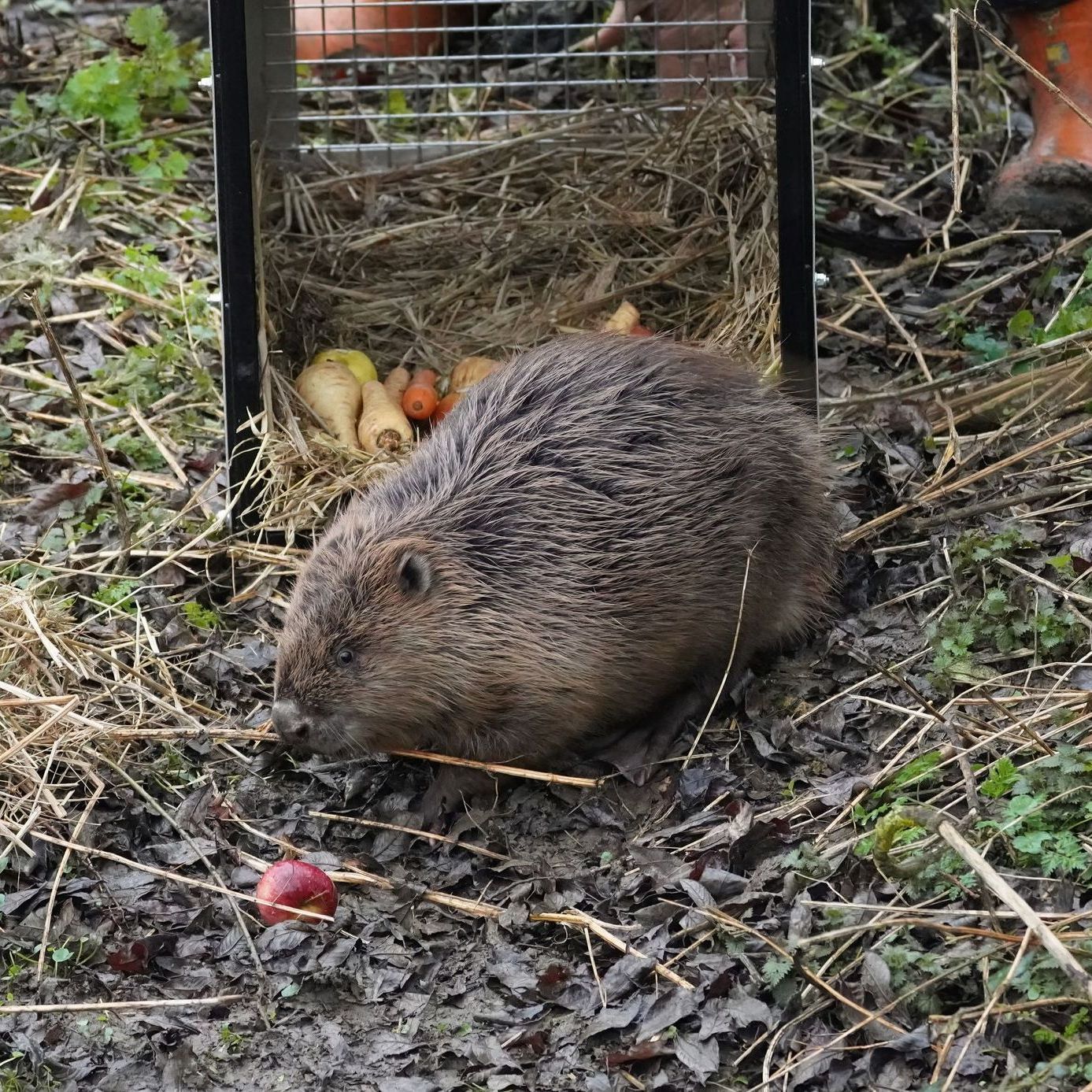
In 2023 a further four beavers were released into two new enclosures.
Project Q and A
The Pilot Project...
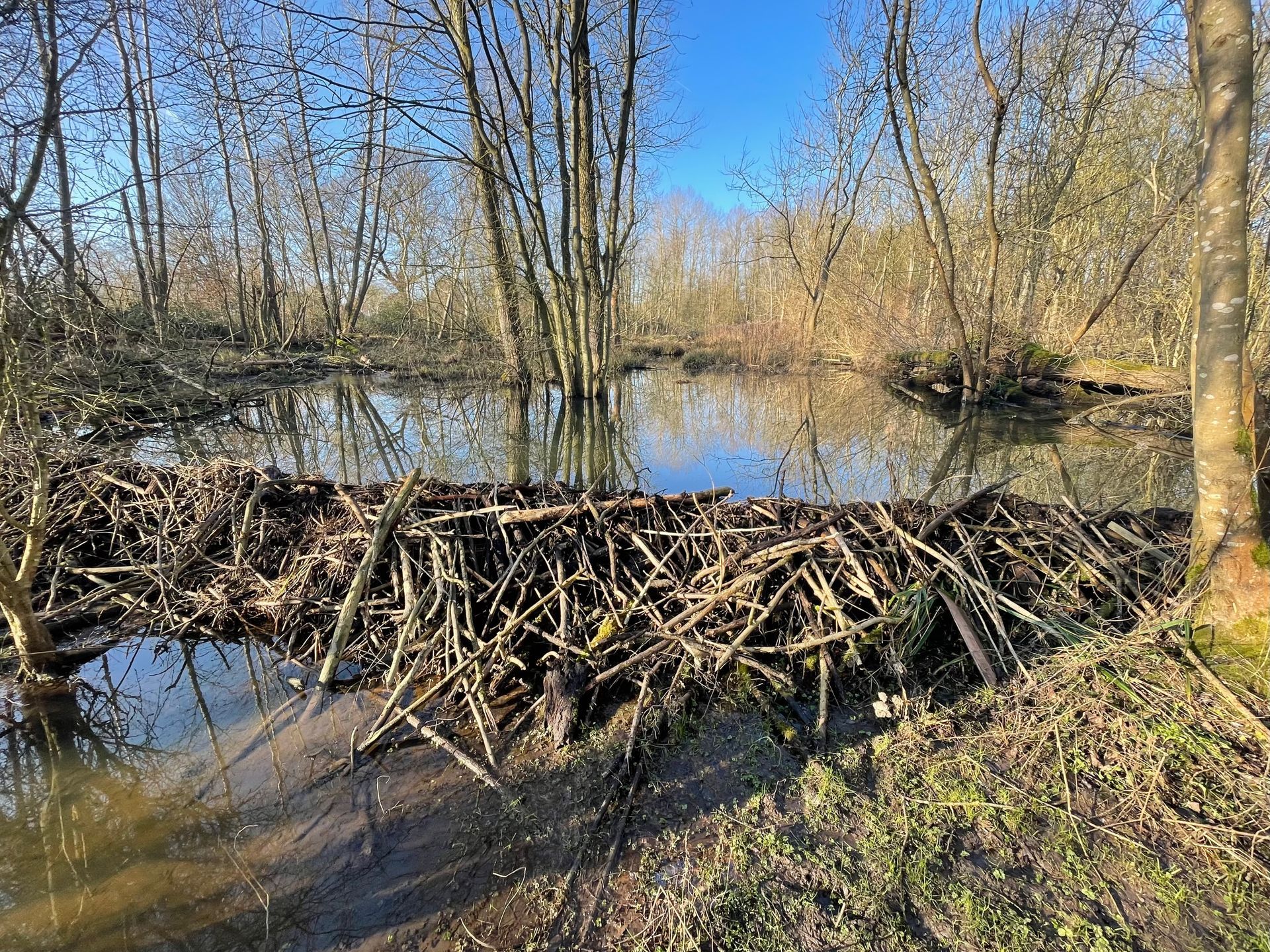
2018 was spent researching other natural flood management (NFM) projects and other sites with a special ingredient. Spains Hall Estate Manager, Archie, became aware of the impacts Eurasian beavers were having at a number of sites around the UK. Specifically, in enclosed (fenced) release sites where they seemed to be transforming drained and degraded landscapes into watery wonderlands which slowed flows, cleaned water and provided homes for myriad other wildlife. Having visited some sites in Devon (and here), speaking to the people managing these projects and learning more about the nature and water benefits, Archie became convinced that beavers could offer a low cost, expert, solution to the problem in his corner of North West Essex.
Luckily, the Estate's project partners, were delighted to support the release of beavers into a fenced enclosure upstream of Finchingfield to test whether they could thrive in a lowland agricultural landscape. At the same time the project installed 8 leaky timber dams, made from wood from the estate, to provide an immediate flood risk benefit.
So the project became a pilot to test and compare beaver engineering with man-made natural engineering.
On 14th March 2019 a pair of Eurasian beavers were released into a woodland enclosure upstream of Finchingfield.
On 17th March 2023 a further two pairs of beavers were introduced to two new, larger, enclosures on the main Finchingfield Brook.
Results of the pilot project...
As you can see from the images, maps and data below the beavers have made an incredible impact on their woodland. But it's not all about the beavers.
The river valley where the timber leaky dams were installed has also been reconnected with it's floodplain. So that in heavy rain water can once again spread out and be stored across the fields as nature intended.
Animations
Wetland development over 4 years
This animation shows how the beavers have created wetlands over 4 years in the Moors. Produced by AtkinsRéalis (using their in house GIS tools together with drone imagery captured by Dave Gasca).
Water flow through the 2019 beaver enclosure
This animation shows how water flows through the wetland in times of rain. Produced by AtkinsRéalis (using the HEC RAS hydraulic model, Environment Agency Open Data 1m lidar and drone imagery captured by Dave Gasca). The flows are theoretical, but very helpful in explaining how beaver wetlands slow water flow across the landscape.
The Beaver enclosures
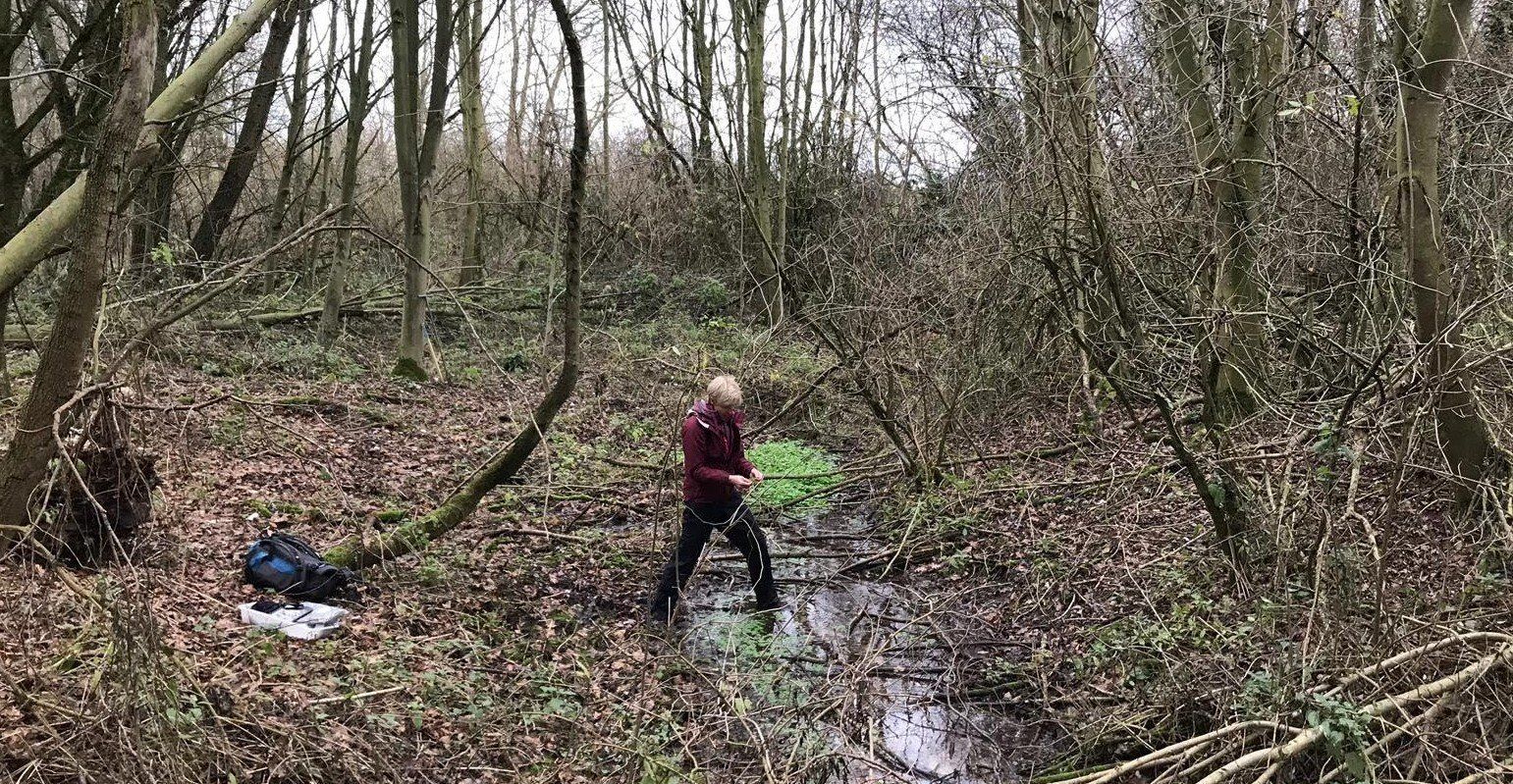
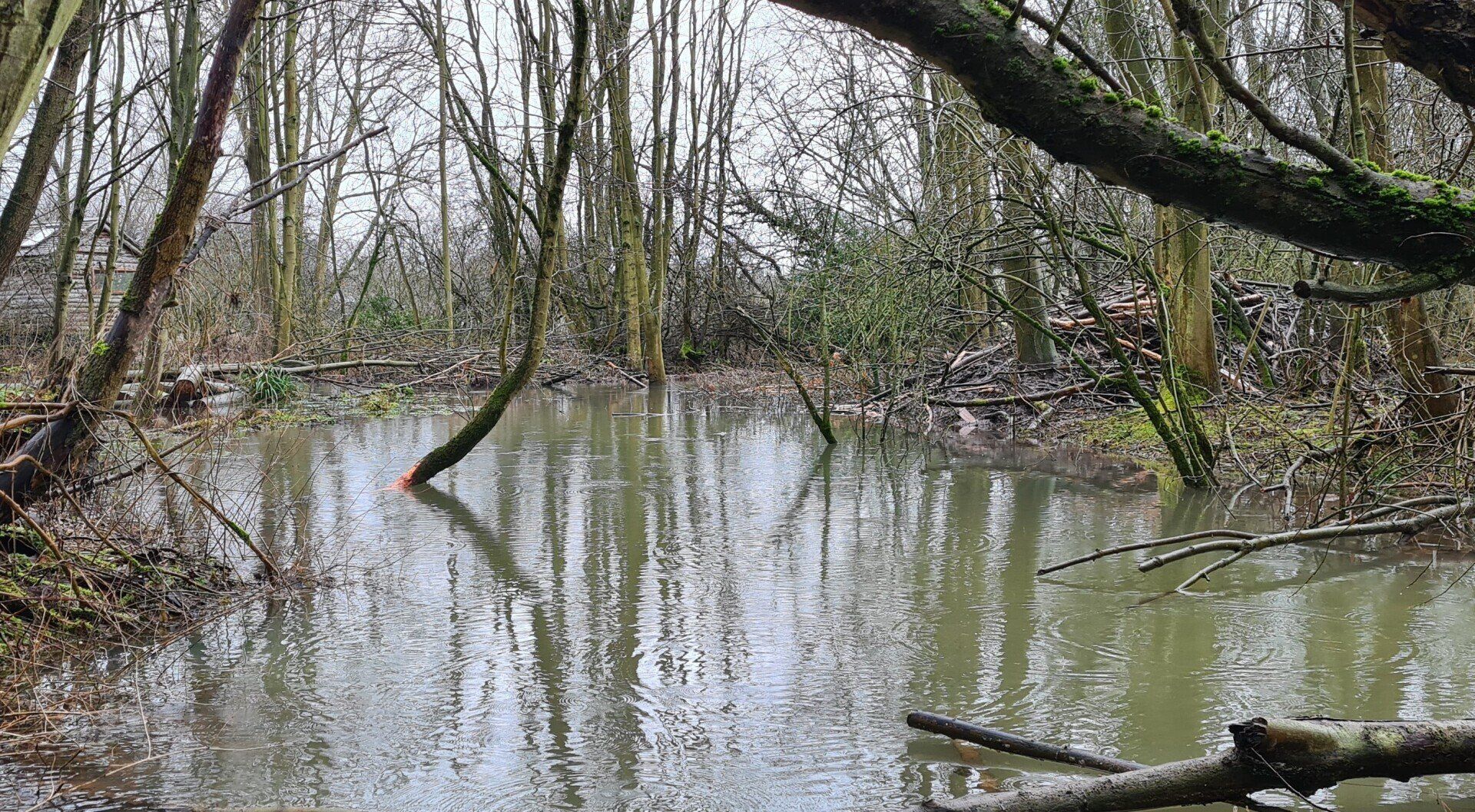
Move the slider to see how the beaver enclosure has changed
These pictures were taken just 2 years apart on the course of a spring which the beavers dammed.
The large pile of sticks and mud (middle right) in the 2020 picture is the beaver lodge.
Project Aims
18
13
£89,000
2
Partners











Latest news